Showing posts with label Greenup County. Show all posts

17 July 2023

Johann Andreas Klaiber aka John Andrew Klaiber: Whispers from the Grave; Klaiber Cemetery, Boyd County, Kentucky

 Compiled by Teresa Martin Klaiber 2023


Johann Andreas Klaiber aka John Andrew Klaiber was the American progenitor of our branch of the family.   He was born 20 October 1832 in Hausen ob Verena, Tuttlingen, Wurttemburg, Germany.  His parents were Matthais and Marguretta Maurer Klaiber.  He was confirmed at age 14, the same year that his father Matthias died.   One of the first emigrant guides for Germans was published the following year complete with maps of the United States including individual maps for Ohio and Kentucky[i].  Perhaps Johann viewed this as a teenager.

The oral tradition passed down through our branch of the family was that he came to America with a cousin but that they were separated in New York and the cousin never heard from again.  Everyone assumed that the cousin was also a Klaiber.  As a researcher, I had an “ah hah” moment when I found the ship passenger list.  Johann Andreas Klaiber’s maternal grandmother was Anna Chistina Gluntz.  Johann aka John came to America with cousin Christian Gluntz who settled in the Buffalo, New York area.  I am always amazed how oral history unravels and was delighted that this one had such validity.

John Andrew Klaiber was twenty-two years old when he decided to come to America in 1854.  The closest port was Le Havre, France which could be reached via the Rhine River.  The “Maritime Intelligence” published in the New York Herald, 7 June 1854, announced the arrival of the ship “Brother Jonathan” which had left 7 May from Havre with 416 passengers.  Entry #298 was Johann Klaiber and #299 Christian Gluntz.  The ship docked in New York on the 6th.  A month long crossing.

Joseph Tucker was master of the Brother Jonathan. Tucker’s father owned a shipping firm in Wiscasset, Maine, which was a major center of trade.  By this time another important publication helped guide German’s, giving instructions, as well as a beginners guide to the English language.[ii]  In this publication item #6 stated that whoever traveled from New York to the west by way of Buffalo…does best to take on one the two great railroads… 

The ship manifest does not list occupation but Klaiber was a bootmaker by trade who made his way to Catlettsburg, then Greenup County, Kentucky. 

On 1 November 1855 John Andrew Klaiber married Mary Ann McBrayer, daughter of James R. and Anna Sanders McBrayer in Carter County, Kentucky.   In April 1857 Klaiber leased property from William Hampton on Division Street in Catlettsburg where he  ran his business.[iii]  Their first child James Matthew Klaiber was born 21 June 1857.

A likeable fellow, Klaiber was a charter member of the Odd Fellows Lodge in Catlettsburg.[iv]  The same year John Andrew Klaiber became a naturalized Citizen of the United States in Circuit Court of Greenup County, Kentucky. By 1861 the family was living on the left hand fork of Catletts Creek, now Boyd County, on land he purchased from Richard and Mary Scott.[v]

By 1864 his business had grown and he was able to purchase the Division Street property which was a portion of the old tavern house lot of William Hampton[vi].    They also owned property on Panola Street. Catlettsburg was a prospering community and bustling river front town. During the Civil War government stores were set up not far from the Division Street property. In 1864 troops marched through the town.  As the war came to a close the logging trade once again flourished and with it a growth of hotels and saloons.

With six children and more on the way, John Andrew and his wife Mary Ann finally settled on Garner, leading to East Fork and back to the Big Sandy River. The road to their property was nothing more than the creek bed later known as Long Branch. The family still traded in Catlettsburg, sold and repaired shoes, and were also able to tap further into the logging trade, by logging the land and hauling the logs, on skids pulled by oxen to the river wharf.

John Andrew Klaiber was just as active with Garner community affairs as he was with his business in Catlettsburg.  He is listed as an officer of  Green Hill Lodge #521 which had a building at that time on our road and is listed as a Master Mason.  He along with a future son-in-law and a few others helped build a “double house” on the poor house farm located on the road in 1876.[vii]  As a citizen he was now required to serve on juries and was sitting on the month long jury when George Ellis was brought back from Lexington and arraigned for killing Robbie Gibbons in May 1882.[viii]  A social post in the Ashland paper in June 1884 announced “the Sunday School on Garner is said to be the most interesting one in the county. Rev. John Klaiber is superintendent.”

John Andrew Klaiber’s mother Marguretta had come over to America in 1870 and died 14 September 1896 while living with the Klaiber’s.  She was buried in what today is Klaiber Cemetery. “Whispers from the Grave” is being done in alpha order and there will be a future blog concerning her[ix].  In May 1899 John Andrew Klaiber purchased a section of what was then known as Sexton Cemetery from Henry Powell and Julina McCormack Sexton.[x]  It was one of several deeds drafted for a very small portion of what is now known as Klaiber Cemetery.  “… commencing at the southwest corner of the graveyard at or near the corner post of a stone marked A…. containing 1/8 of an acre…have the privilege of ingress and egress at any and all times…”  The cemetery has far outgrown any of these early deeds with the Klaiber’s simply donating more of the area for burials over the years.

In April 1919 The West Virginia Methodist News published an article about the Klaiber’s stating their home had always been the home of the Methodist preacher Rev. John Martin (no relation to compiler) who so often visited their home in their young days would retire to a room upstairs for prayer and study and called the room the prophets room. At the time of the article it stated that in about 1917 Mr. Klaiber fell and dislocated his hip. The Article was submitted by Mrs. J. C. McGlothlin.  

John Andrew Klaiber died 4 December 1920.  On his death certificate it is interesting to note that under burial the word Sexton was marked out and Hood written over.  Many of the cemeteries, especially in our area, are named for people that own the surrounding property.  Today we try to standardize the names and the cemetery is listed with the state of Kentucky as Klaiber Cemetery.


[i] Bromme, Taugott, Rathgeber fur Auswanderungslustige, A guide for German Emigrants. Suttgart 1846

[ii] Princeton University Library Special Collection PULIFA 2.0 Joseph Tucker Papers

[iii] KY Boyd dbk 3 p 447

[iv] Armstrong, Jim “Parade Scene” Historical Daily Independent, 14 March 1977, Catlettsburg Memories

[v] KY, Boyd deed bk 1 page 153

[vi] KY Boyd Deed book 1 p 506

[vii] KY Bod Court Order bk 3 Nov. term

[viii] The Ashland Tragedy page 329

[ix] Whispers From the Grave is NOT a complete list of all buried in the cemetery but does contain many of the oldest .

[x] KY, Boyd deed book 29 p 613

13 July 2023

James Matthew Klaiber: Whispers from the Grave; Klaiber Cemetery, Boyd County, Kentucky


Compiled by Teresa Martin Klaiber 2023


James Matthew Klaiber, the son of John Andrew and Mary Ann McBrayer Klaiber was  born 21 June 1857 in Catlettsburg, then Greenup County, Kentucky.  He died 22 December 1949 on Garner in Boyd County, Kentucky and is buried in Klaiber Cemetery.  This compiler’s husband was two years old and watched the casket being carried by horse and sled runner wagon, in the snow, up the hill to the cemetery.

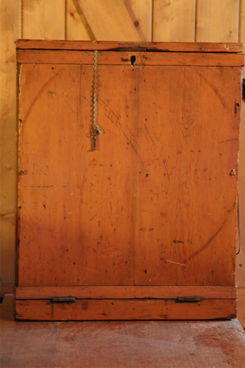
I wrote a more detailed description, which you can read, and posted his Blacksmith journal in 1999. Just hover over the word Blacksmith and click to go to the link.  My husband and I cherish his blacksmith journal as well as his desk which was nailed on the wall of his tiny shop on the side of the hill. 


In June 1947, just three months after the birth of James David Klaiber, the family had a dinner for the entire family to honor James Matthew Klaiber’s 90th birthday. At the age of 92, in 1949,  James Matthew Klaiber appeared in Ripley’s Believe It or Not.  The art work, taken from a submitted photograph, was said to be one of the last, if not the last done by Ripley himself.


05 June 2023

Sarah Fannin Howe. Whispers from the Grave; Klaiber Cemetery, Boyd County, Kentucky


Compiled by Teresa Martin Klaiber 2023


Sarah Fannin was born 16 August 1813, in Virginia, one of nine children born to John and Keziah Fannin.  By 1820 the family was living in a portion of Greenup County that would become Lawrence the following year.

Sarah Fannin married George W. Howe, born in Greenup County, 20 October 1836 in Lawrence County, Kentucky “having produced a certificate from John Fannin, father of Sarah consenting” to the marriage.  Women had no contractual rights under early Virginia and Kentucky law and two parties were needed to obtain the marriage license, one usually the father acting as bondsman.

George W. Howe was the son of James and Martha Ann Hood Howe.  Sarah first appears on a land document, with George, in Carter County, 10 October 1841 when George and James Howe of Greenup make a deed with Alexander Hannah. The deed does not give the land description.  Both George and Sarah sign the deed[i]  George’s father James died in 1845.[ii]  Howe’s lands were extensive and George W. along with siblings were involved in various suits and partition deeds following James Howe’s death.

It is the compilers believe that George W. Howe, made a serious mistake becoming indebted to Richard Apperson, a Kentucky lawyer and politician.  A Carter County, Circuit course case ended in a deed dated 19 May 1849[iii] transferring land from George W. Howe to Richard Apperson whom he was indebted to for the sum of $980.50.  The debt involved bonds of James W. Davis and Alfred Low, thus Howe mortgaged a tract in Lawrence county to Apperson.  The tract also included his right, title and claim to the “landed estate which descended to him from his father James Howe, deceased”.

George W. (as an heir of James Howe) appears again 4 November 1852 along with his siblings involving Carter Circuit Court with Apperson acting as commissioner involving land described  in the Grayham Survey to John Fannin “in Lawrence County where John Fannin now resides…”[iv]  This is Sarah Fannin Howe’s father. John, died, shortly after on 25 June 1853.[v] When John Fannin wrote his will (after providing for his wife) he included the equal division of property to his children citing Sarah as the wife of George Howe.[vi] 

Keziah Fannin, Sarah’s mother died 31 October 1854.  Keziah also wrote a will about the same time her husband did[vii] In the midst of the Fannin deaths there was also another case in Lawrence Circuit Court with Richard Apperson against George W. Howe (defendant) and others for a mortgage on 101 acres of land on the East Fork where “the defendant Howe resided.”  The Land was sold to George W. Prichard.[viii] As a woman, I can’t imagine how stressful this would be, especially with small children.

There are several more deed transactions involving George W., his siblings and the James Howe estate in both Lawrence and Carter County in the 1850s and into the 1860’s.  But reading between the lines, Sarah must have had enough, and by 1860 George is no longer on the Federal Census records for this area.   Sarah first appears, in her own right, on the Carter County Tax list, on Garner, with no values in 1857. Their youngest child, Matilda Rebecca was only four years old.

The 1860 census lists Sarah doing house work, born Virginia, next door to the Hiram Gallion Family[ix].  Sarah has eight children living with her and no adult male within the household.  The eldest child Martha has turned 21, James 19 and John 17 both day laborers along with Hiram 16, Philip 13, Sarah 11, Andrew George W 9 and Matilda Rebecca the youngest.

Several researcher’s claim that a George W. Howe, born circa 1810, Kentucky, who went to Oregon, is Sarah’s estranged husband.  This George W. Howe is said to have arrived in Oregon 30 October 1853[x].  We continue to see Sarah’s husband, George W. Howe cited, as late as 1868, on documents, in Carter, Lawrence and Boyd counties in Kentucky, including his father-in-law’s will written in June 1853. However, the deeds are all signed by commissioners or agents beginning in May 1853.  The last transaction dated 13 January 1868 has his brother-in-law, William P. Hood, acting as his agent[xi]     

The George W. Howe of Clackamas County, Oregon received donation land in 1853.[xii]  But if he is the same George W. Howe, folks in Carter, Lawrence, and Boyd County, Kentucky, were unaware of his death.  The census for Oregon City was taken  June 6th and George W. Howe appears as a brick burner [xiii]born in Kentucky.

The George W. Howe, of Oregon City, Clackamas County came to a tragic end. The Weekly Oregon Statesmen reported on 26 June 1860 “While firing guns at At Oregon City on Thursday evening last, the vent hole of the cannon was carelessly left open and two men, one of whom is named Howe and the other a carpenter is known as Curly who was loading the gun had each arm blown off above the elbow. One of them the right and the other the left…”  On 3 July the paper reported “the names of the men injured by the premature discharge of a cannon in Oregon City are George Howe and Fred Curley. Their shattered arms have been amputated and they are both doing well.” On July 21st the paper simply posted “George Howe of Oregon City who was injured by firing a cannon is dead.”

In George Howe’s probate packet is listed books, brick molds and the statement that there are no heirs.[xiv]  Thus if the Oregon Howe was one and the same, Sarah and his own siblings were unaware of his tragic death back in Kentucky.  There is no indication among the receipts, inventory and other documents that anyone within the court system in Clackamas County, Oregon had contact with anyone in Kentucky.

Tragedy struck when 9 December 1861 Sarah’s son John W. Howe, a soldier, died of typhoid fever while at Camp in Hardin County, Kentucky.[xv]  John had joined the Second Cavalry on 14 July 1861 at Camp Joe Holt.  The unit was moved to Camp Nevin in Hardin County, Kentucky.  Harpers Weekly showed a sketch of the camp in their publication just a few days before John died.  Dan Master’s Civil War Chronicles gives a good description of the sickness and what it was like at the camp.

By 1870 Sarah Fannin Hood is living next door to Matilda Howe Hood, sister of her estranged husband George W Howe and Matilda’s husband William P. Hood,  Sarah is living with son Phillip Howe,[xvi] who is farming, along with other family members.  The next census entry is Sarah’s son James W. Howe[xvii] and wife Sarah Elizabeth Hood Howe[xviii].

Sarah Fannin Howe died 6 June 1874, age 66 years 9 months and 31days. She was laid to rest in Klaiber Cemetery.  In June 1996 the Klaibers repaired the tablet stone that had been broken.


[i] KY, Carter dbk 6 page 373

[ii] James Howe and wife are buried in Oldtown Cemetery, Greenup County, KY

[iii] KY, Carter dbk B  275

[iv] KY, Carter dbk 7 p 88

[v] John Fannin is buried Stewart Cem., Rt. 3, Lawrence County, KY

[vi] KY, Lawrence Wbk p 43

[vii] Kozee, Wm., Eastern Kentucky References, p 166

[viii] KY, Lawrence Dbk D p 419

[ix] Hiram Gallion is buried in Klaiber Cemetery

[x] https://secure.sos.state.or.us/prs/personProfileSearch.do

[xi] KY, Boyd dbk 3 p 458

[xii] Oregon Land Claim OC 2548; roll 29

[xiii] Brick burner in charge of kiln and responsible for correct temperature during firing.

[xiv] Oregon, Clackamas Box 13 #6 A-40

[xv] Fhl 994030 KY death records…Carter County cites parents, residence as Carte r Co and death in Hardin Co.

[xvi] Phillip later removed to Oklahoma

[xvii] James W. Howe eventually removed to Kansas

[xviii] Sarah Elizabeth is the daughter of William P Hood and Matilda Howe Hood, while James W. is the s/o George W. Howe and Sarah Fannin Howe.

25 July 2012

Jeremiah Is A Very Old Man

compiled by Teresa Martin Klaiber

July 2012

I usually get a few chuckles and hearty laughs when reading old newspapers and their headlines.  As I grow older this one gave me food for thought.  If someone posted that I was a very old person would I be embarrassed or insulted to be called old.  I have decided I would be very proud to have lived a long life, have many experiences and to be recognized.

"Portsmouth Times, Portsmouth, Ohio, January 21, 1911 JEREMIAH IS A VERY OLD MAN -- The Catlettsburg Tribune says that Rev. Jeremiah Farmer, who for many years has made his home in Greenup county, is possibly the oldest minister in the state of Kentucky, if not in almost the entire country.  Though well on toward the place of a centenarian he continues to remain quite active and travels about very considerably.

One day last week he drove from his home to Greenup and the Greenup Republican noted the visit of the venerable servant of God in the following words: "Uncle Jeremiah Farmer drove to Greenup Tuesday from his home on Tygart. He is one of the oldest ministers in our county, but still gets around pretty well for a man of his extreme age."
No where in the article did it say his exact age, though it hints to close to 100.   Of course, I am a genealogist and had to go look up his age.  The 1900 Greenup Census states that he is 91 years of age, born in 1819 in Kentucky, the grandfather of Jeremiah Pugh.

I so hoped Jeremiah would make Centenarian.  But, alas, he died March, 12, 1912. The death certificate states that he was born November 14, 1818 and was 94 years, 4 months and 10 days old the day he died.

Jeremiah Farmer was the son of Joshua and Mary Williams Farmer.  He is buried in Liberty Cemetery, Greenup County, Kentucky.

My perspective is changing as I grow older.  I remember thinking 40 was a mile stone.  My grand daughter, in sweet innocence looked up at me one day a couple of years ago and proclaimed "Mawmaw, you are ancient."    In my mind the mile stone of 40 has now changed to 90 and 100.  After all the Smucker jars on the TODAY Show have multiplied dramatically the last few years.  Oh what the heck here is to 110!

22 February 2011

Pleasant Barber

compiled by Teresa Martin Klaiber
February 2011

Pleasant Barber is said to have been born 27 March 1842, his pension indicates March 1844 and census indicates as early as 1840 in Greenup County, Kentucky. When he died 19 October 1897 he died with the surname Barber. He is buried in Ashland Cemetery, Ashland, Boyd County, Kentucky.

His mother's first name is Phoebe. Many researchers have repeatedly copied other researchers work stating that she was the daughter of Joseph Barber and Nancy Goad. They lead you to believe that Pleasant took his mother's maiden name as an adult. At this point in my research I am not convinced that this is the case.

Most suppositions by those researchers seem to be based on the 1850 Federal Census for Greenup County, Kentucky. This census shows Phoebe age 41 in the household of Jacob Hood and lists the following children all with the surname of Hood: Hezekiah 16, Nancy A. 13, Pleasant 10, Tabitha 6, and Bluford 4. Also in the household is Nancy Barber [nee Goad] age 72 born in Virginia.

Looking at this census Pleasant Hood has yet another birth year - circa 1840. The assumptions made by researchers is that Nancy must be Phoebe's mother. It is an assumption because the 1850 does not give relationships in households. Being under the same roof does not define a family group simply by age. By experience I know this assumption can sometimes be a slippery slope.

Jacob Hood married Phoebe Barber 17 November 1842 in Greenup County, Kentucky. The marriage record does not state if either the bride or groom might have been married prior to this union. Most Jacob Hood researchers state that Jacob Hood's first wife died prior to the 1842 marriage. She did not. Most Jacob Hood researchers simply say he disappears from records after the 1850 census entry. He did not.

Jacob Hood married 20 November 1829, Greenup County, Kentucky Joanna Lewis. On 3 April 1842 according to Greenup County Civil Court Orders [film 989385] Jacob divorced "Joan" Hood. He was then free to marry Phoebe.

By 1860 Pleasant is residing in Ashland, Boyd County, Kentucky with Dr. Hiram Ferguson and family. The census gives his age as 19 [birth 1840/41] and he is still utilizing the surname Hood. Analysis of the 1850 and 1860 census would place Pleasant's birth prior to the marriage of Phoebe Barber to Jacob Hood. Thus he was either illegitimate or Phoebe __ was married to a Barber prior to her marriage to Jacob Hood.

Continuing a review of the 1860 census Jacob Hood is now residing in Carter County, Kentucky with wife Mary and several Cooley children. Jacob Hood married Mary ___ Cooley 8 July 1860 in Carter County. To date this compiler has not found a divorce for Jacob and Phoebe. Phoebe does not appear in any 1860 census I have reviewed but reappears in 1870.

In 1865, the subject of this study has enlisted in the 14th Regiment mustering in at Louisa giving his age as 21 [birth now stated as 1844]. He continues to appear on muster rolls, tax lists, census, and directories as Pleasant Barber with no further mention in his records of the surname Hood.

The next step was to follow the trail of the other male minors in the Jacob Hood household from 1850.

The eldest minor was Hezekiah Hood but by 1860 he is listed as Hezekiah Barber, born about 1835 in Virginia. He is residing in the household of a William Barber just 2 years older and William's family. William Barber was also born in Virginia. Hezekiah migrated to Elizabeth Township, Lawrence County, Ohio by 1870 and later dies 5 June 1924 in Wellston, Jackson County, Ohio. From 1860 until his death he continues to use the surname Barber.

The youngest male child in 1850 is Bluford Hood born after the marriage of Phoebe Barber to Jacob Hood. In 1860 Bluford Hood is in the Andrew Hood household in Carter County, Kentucky. He enlisted at Louisa in 1863 in Company K of the 45th. As expected he is utilizing the Hood surname.

While I have not located Phoebe Barber in 1860, she was still living. In 1870 Phoebe is listed as infirm residing with Hezekiah in Decatur Township, Lawrence County, Ohio. She is 56 years old. Also in the household is a Joseph Hoode age 5 born in Kentucky. For those Barber/Hood researchers who may be scratching their heads and not locating this census it is because The Barber family is listed as Barker. Hezekiah is living next door to Bluford Hood. Thus in 1870 Phoebe is cited as Phoebe Barker.

Joseph Hood"e" born in 1865 was born five years after the marriage of Jacob Hood to Mary __ Coley. To date this compiler does not have any documentation for Phoebe from 1860 until her reappearance in 1870.

Phoebe continues to reside in Lawrence County, Ohio and by 1880 she is listed at Bluford Hood's as his mother, age 68, a widow with the surname Hood, born in Virginia and her parents born in Virginia.

Phoebe's death record gives no further clues about marriages. She died 7 June 1881 in Washington Township, Lawrence County, Ohio as Phoebe Barber . The register simply states that she was a "widow" at her death.

From the analysis we can safely assume that Phoebe was in Virginia in 1835 when Hezekiah was born. She did migrate to Greenup County, Kentucky about the same time that Joseph and Nancy Goad Barber did. Joseph was in Campbell County, Virginia in 1830 and in Greenup County, Kentucky by 1840.

In the 1830 Campbell County, Virginia there are females in the Joseph Barber household but none fit the age of Phoebe. If she is Joseph Barber's daughter she is not living in that household in 1830.

Joseph Barber does have a son named Pleasant Barber. This Pleasant was born about 1808 in Virginia and married Jane Crain according to researchers. {I find a marriage of a Pleasant to Irene Crane 20 Aug 1831 in Campbell County but have not located a marriage under Jane Craine.} This Pleasant is in Greenup and Boyd County and in 1870 is residing in Upper Township, Lawrence County, Ohio. This family unit ended up in Cass County, Missouri where they died.

Joseph and Nancy Goad Barber also have a son Reuben who married Frances Mary Crain. They named their first son Pleasant Barber. He was born 15 May 1827 in Virginia. Pleasant married 2 December 1851 in Greenup County, Kentucky to Jestine Betts. By 1880 Pleasant and Jestine are residing in Oak Hill, Jackson County, Ohio.

Joseph Barber appears to have died about 1844 when the Pleasant Barber, our subject was an infant/toddler. Joseph had no land holdings according to the Greenup County tax rolls. Researchers attribute four sons to Joseph: Pleasant, Reuben, Charles and Lewis along with 2 daughters. It is possible that there were other sons, one who may have married Phoebe of this sketch.

Until further evidence crosses my desk I will try not to assume more than the records indicate. Phoebe had at least one or possibly 2 [William] male issues under the name of Barber while residing in Virginia. After her marriage to Jacob Hood her children born prior to that marriage are in the census utilizing their step father's surname which was not an uncommon practice. As the minors reached adulthood they went back to using the surname Barber.

Our subject, Pleasant Barber married 9 November 1865 in Morgan County, Kentucky to Mary Ann Phillips. The family had six children and in later years lived on West Front Street in Ashland, KY.


23 October 2010

Treasures From Our Father's Past

compiled by Teresa Martin Klaiber
October 2010


I recently read that the Highlands Museum and Discovery Center in Ashland, Kentucky is developing a wonderful display with World War II memorabilia and will be host to a traveling exhibit as well.

During and after the war soldiers families received advertisements to submit their picture and information for publication in a book. The books were published across the country. Today we tag these type of books as "vanity books." You paid to submit your information and got a copy of the book.

But the World War II books and many other of these historical submitted publications are truly jewels for family and genealogists today.

The Boyd County Public Library received a worn and tattered copy of Patriots of Kentucky WW2 as a donation the other day. You can tell the book has been used over and over again.


I found no publisher listed nor date of publication. But the dedication says "To those who have died for their country - 2nd WW." It does not appear to be the same series as the WWII Young American Patriots 1941-45 series. But the publication is similar.

Another quirk of the publication is the use of 2 vs II throughout the publication. And unlike the Young American Patriots Series the photographs are not alphabetical. The book is organized by town and then by soldier. The book states "Look for your hometown and refer to the page indicated where you will find your picture and historical sketch..."

I spent some time just reading the list of cities and towns in the front of the book. Many of our soldiers were from rural Kentucky and I did find a few entries for Kentucky's unique rural burgs. Most entries, of course were for Louisville, Lexington and a large group from Ashland.

Since this blog is based in the postal service area of Rush, Kentucky I of course looked to see how many entries were from this area. I found two entries. Many more served from this area of Boyd County but these two were submitted:

Charlie C. Coburn Pvt 20, Entered US Army Inf. European Theater. Attended Boyd Co. School. Member of the Methodist Church. Son of Mr. and Mrs. Arthur Coburn. Rush, KY.

J. H. Lambert, Pvt. 22 US Army. Mediterranean. Attended Canburg High School and Baptist Church. Son of Mr. and Mrs. Lindsey Lambert.

Canburg is the Boyd County High School that was then held at Cannonsburg, Boyd County, Kentucky.

Three more entries caught my eye from northeastern Kentucky. Having raised three sons my heart went out to the mother who waited back home for word from three of hers. Under Flatwoods, Kentucky I found the entries of Charles Kenneth Clarke age 20 in the US Army and a POW in Germany. Lemuel Morton Clarke age 35 in the US Engineers and Leonard G. Clarke age 21 in the US Army. All three gentlemen the sons of Mr. and Mrs. W. R. Clarke.

William R. Clarke and wife Stella are listed in the 1930 Federal Census in Russell, Greenup County, Kentucky. Kenneth and Leonard are 5 and 6 years old and Lemuel Morton is listed as Morton age 20. The Clarke family was large with a total 0f ten children that year. It was no surprise to see that William R. Clarke supported his large family by working at the steel mill.

My generation grew up surrounded by silent hero's. They did not talk much about their service until the past few years. Now they are leaving us. This wonderful book was not about vanity but pride in being an American.

This treasure can be viewed in the Minnie Crawford Winder Genealogy Room at the Boyd County Public Library.


19 August 2010

Name That Cemetery!

compiled by Teresa Martin Klaiber August 2010

No this isn't a quizz show. I had a call from California and the caller was confused by the names of the cemeteries in Boyd County, Kentucky.

The caller was working on a Stephens family which means she also had to look at Stevens spellings. She had a death certificate for a Stephens showing one of her ancestors in Stevens Graveyard but when she utilized the Boyd County Master Cemetery Database it stated he was in Stevens/Marcum Cemetery. When she looked at the Boyd County, Kentucky Cemeteries Location Guide she found four cemetery listings utilizing both spellings at different locations. Could "the cemetery lady" please help her?

Working with genealogy every day it is easy to assume that everyone knows genealogical abbreviations and lingo. Working with the Boyd County Cemetery Master Database is also easy interpretation for those of us that utilize it every day. There is a nice introduction on the history of the database in the Location Guide. Since one file is .pdf and the other a searchable dbase not every online user gets to the introduction.

Cemeteries have a history of changing names with land ownership, not just here in Eastern Kentucky but across our nation. A good example is the history of our own Klaiber Cemetery which has had at least four different names over the years & geological survey maps incorrectly spelled it Clyber. Coroners and undertakers many times either incorrectly spelled the cemetery name or named the cemetery after the person being buried there compounding the name problem.

Thus when the Kentucky Historical Society Cemetery Grant began in 1968, volunteers needed to be very careful when submitting data, especially since there may be more than one cemetery with the same name in any given county. The volunteers needed to distinguish any two with the same name. KHS required that each cemetery have a name and some cemeteries were unnamed. It was up to the volunteers to provide a name for each cemetery while distinguishing them individually.

KHS required latitude and longitude as the only form of direction. This only added to the problems. First, unlike today, only a few professionals had anything like a GPS with them and secondly the volunteers had to manually figure the coordinates which left room for error [we found one directional placing the cemetery in the Ohio River]. The KHS form did not give route numbers.

The reality of the KHS Grant program was that it failed on several levels and was a huge success at the same time. Yes I know that statement does not seem to make sense. So let me explain. First it failed on the state level simply because early computers could not handle all the data from all the counties. Next because of computer limitations each cemetery was assigned a number instead of utilizing the assigned names causing even more confusion. Thus the failure. But the grant required that a copy of the typed material be left in each county and that was and is a huge success.

The more I worked with my beloved Boyd County cemeteries the more I became aware of the "name game" and all the limitations it caused for researchers. I began keeping a notebook with notations on each cemetery which developed into The Boyd County, Kentucky Cemeteries Location Guide. Far from a publication, it is simply a collection of historical notations and directions to cemeteries within the county. Because of the various name changes or "AKA" [also know as] each entry is cross referenced.

As my notes on cemetery names grew so did my notebooks with information on who was buried in each. I collected the KHS typed forms and then compared them with the available handwritten entries that, coordinator volunteer, Evelyn Jackson kept for Boyd County. A few of the readings never made it KHS. It became apparent that a master index for Boyd County was a must and new computer technology allowed me to develop a template.

When creating the columns I knew instantly that the KHS numbering system did not work and a column would have to allow for the cemetery name. With the "name game" I soon realized the column needed to be large enough to include some description. Thus we have "Stevens on Durbin", "Stevens/Marcum", "Stevens, Otis" and simply Stevens. If you look in the Location guide you will get directions and information on each. Stevens/Marcum has an AKA Marcum and is cross referenced in the guide as Marcum because some death certificates listed it as Marcum Cemetery.

With the template in place our newly created "Boyd County Master Cemetery Database" was on the way. A column for the source was marked KHS as all the typed grant forms were entered. Another column tells the viewer the year the entry was created. When step #1 was completed Jackson's hand written notations were added with any entries that had not made it to KHS. The source column is marked ESJ telling the reader that it was from her files.

Step #3 was the addition of any older readings that I had found scattered throughout publications and in the vertical files. If an entry differed it was added to the database.

Step #4 was the addition of entries from death certificates 1911 - 1916. The source column then says Dcert. By adding these we know of people that are buried in unmarked graves.

The database at this point still had and has limitations. We knew that not all Ashland Cemetery was in the KHS readings nor did we have Rose Hill entries completed from a separate book. The older entries from Rose Hill have now been completed thanks to Jim Kettel and Ashland Cemetery has supplied the library with additional information which is online as well. Still far from complete the Master database continued and continues to grow.

Step #5 developed with the creation of the Boyd County Fiscal Court Cemetery Board. Again new technology made "reading" a cemetery a thing of the past and "digitizing" the cemetery the new lingo. Joyce Whitlock and I set out on a two year journey across Boyd County to photograph tombstones. Once the tombstone was uploaded to the computer, a split screen view of the actual stone allowed less mistakes in entries into the dbase. While a majority of the cemeteries are digitized it is still an ongoing process. The digitized photographs are available at the Boyd County Public Library.

We have been working with the Boyd County PVA office who is also digitally mapping the county and the cemeteries. During one of our first meetings I asked about a particular cemetery and was told since they did not have the name they just called it whatever came "closest to the location." Oh the haunting "name game" again. The PVA office now utilizes the Location Guide and we hopefully have resolved creating yet another "AKA."

The database has proven to be extremely beneficial for researchers as it continues to grow. It has answered some interesting questions over the past few years. In one example we knew from the KHS reading that a stone existed in 1977 but was not standing when digitized for the followup a couple of years ago. By following research leads with help from the database we were able to determine when the grave and stone had been moved and where it now is.

In the case of the caller from California she was able to determine gps and driving directions to Stevens/Marcum Cemetery. She quickly had the site up on Google Maps and now knows where her ancestor is interred.

The database entry shows that it was from the KHS reading and in the comments line was typed "unmarked." Since no additional comments or entries were made when we digitized the cemetery in 2005 no stone was located at that time either. Additionally the caller says she has the death certificate and an obituary stating that her ancestor is buried next to his wife. That information adds another unmarked burial in Stevens/Marcum Cemetery.

Thanks to the collective efforts of the Boyd County Fiscal Court Cemetery Board, the cemeteries of Boyd County now have road signs giving an added aide for drivers to locate those tucked in the foliage on the hill and hopefully solidifying the question of the name of each cemetery in our county.

It has been an honor to share the database template with our neighboring Greenup County. The template is designed so that other counties with data can be added or merged with Boyd County. The dream of the original KHS project so many years ago has become a local reality. Greenup County and Carter County all have cemetery road signs as well. Seeing the road signs makes me hope that the "name game" is no longer like a quizz show.